
Post Lawn Renovation Care
Will I need to do anything to care for my lawn post-renovation?
In short, yes, but don’t worry it isn’t a lot! We want to ensure that your lawn has the best chance of a healthy germination rate and for this, we do need your help alongside Mother Nature! Please water the new seed to assist germination (if we do not receive any significant rainfall) every 2-3 days with a fine sprinkler hose attachment and leave on the lawn for around 1-2 hours in each area.
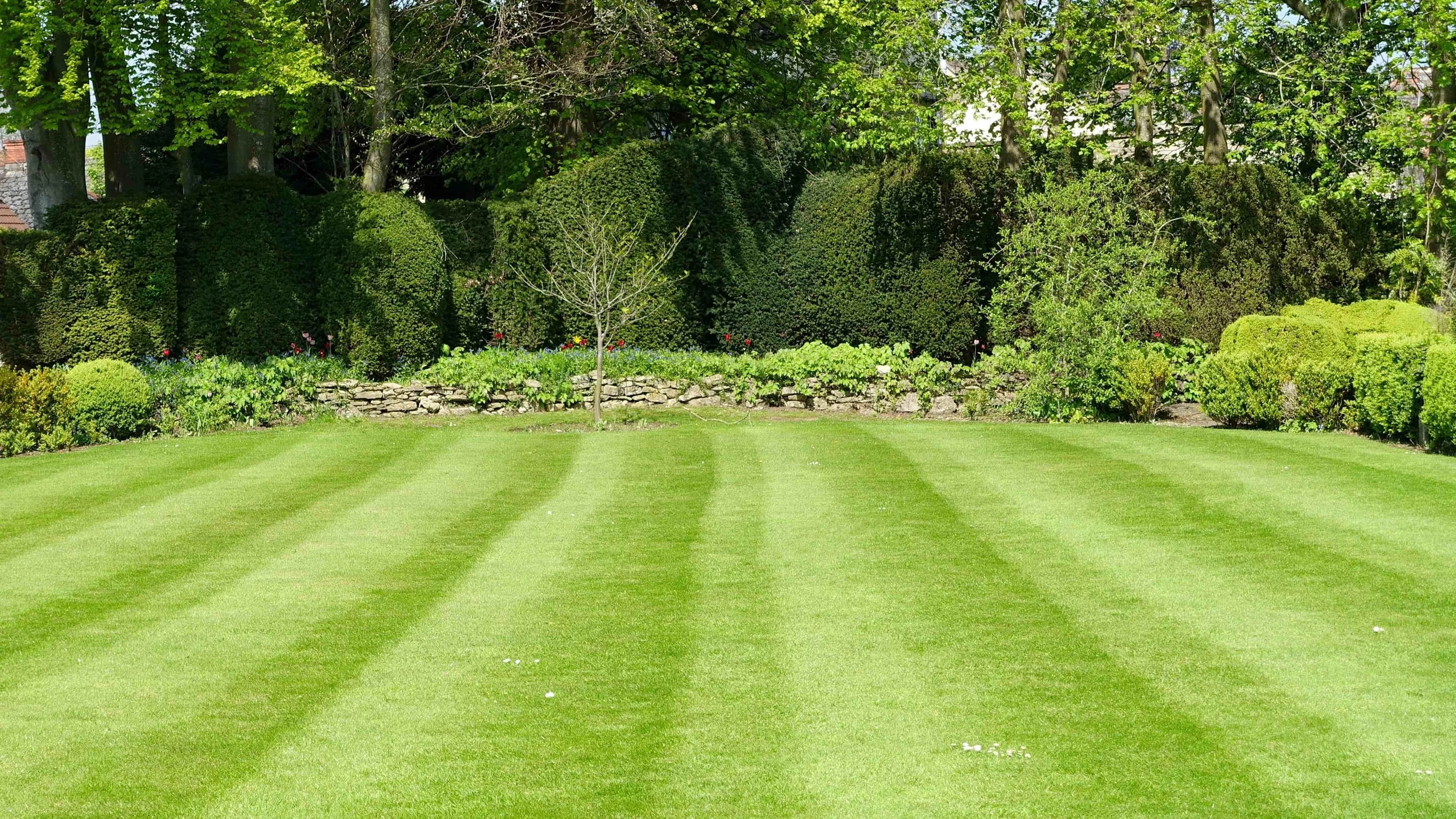
Once the new grass is established (around 2 inches growth), please begin regular mowing on a high setting (at least 2 inches/5 cm) to encourage the lawn to thicken up. Be careful, as close mowing will encourage weeds and moss to re-establish. Mowing is especially important as we head into spring as growth will speed up and the weather allows you to cut more often. Remember, the more often you mow the more your lawn will thicken up.
Post- Renovation Guidance and FAQs
How long will the new seed take to grow?
You will start to see germination in 14-28 days depending on water/rain and soil temperature. Please be aware, it can take up to 6 weeks to see an inch of growth from new seed. Please note, you see three distinct stages of seed growth – primary, secondary and tertiary stages – which means that all the grass seed will not grow at the same rate. Some areas will come through quicker than other areas, depending on environmental factors.
These stages are as follows:
1. The primary stage involves the seed closest to the surface germinating.
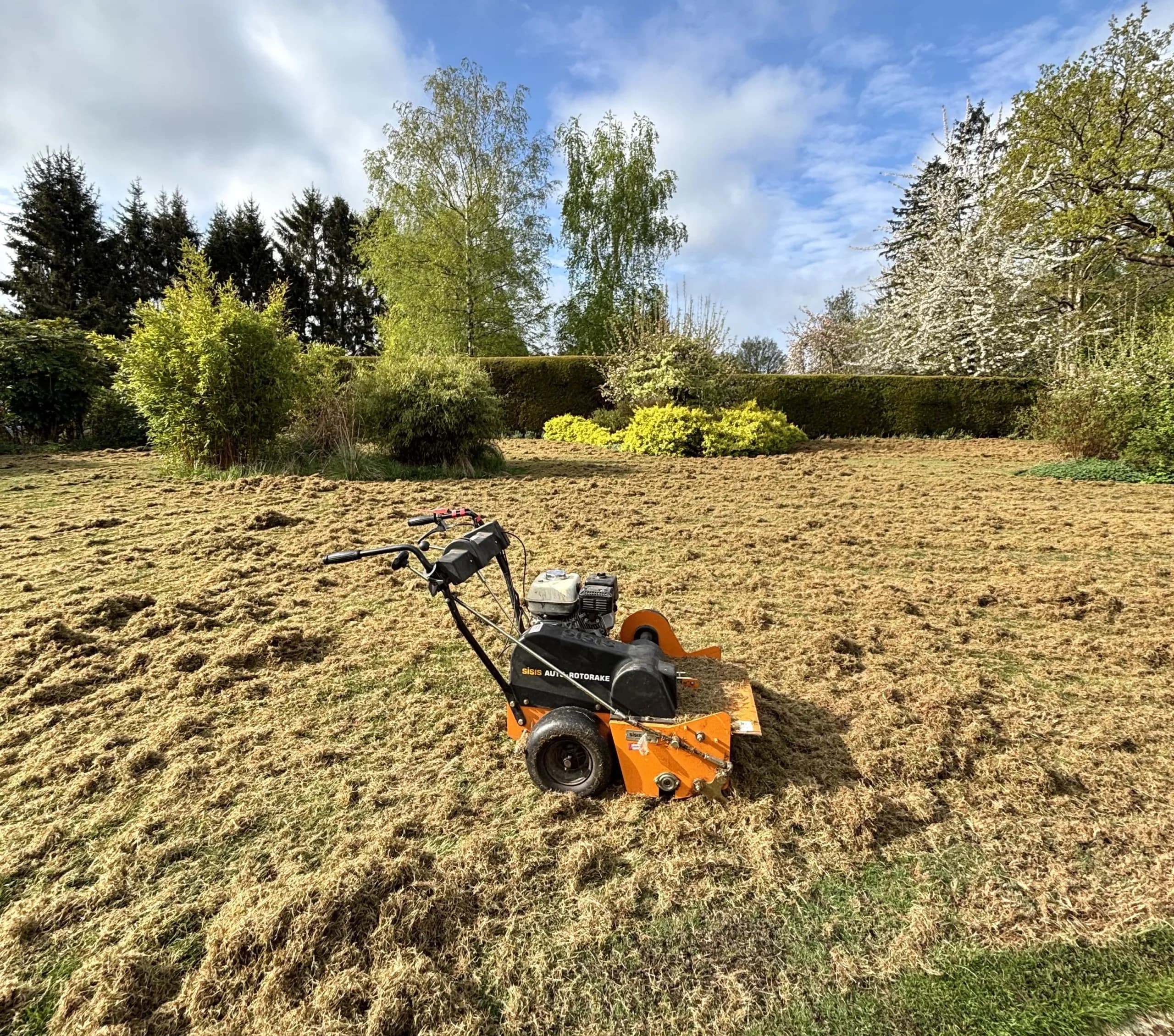
2. The secondary stage involves the seed germinating that has fallen into the slits in the soil made by the scarifier.
3. The tertiary stage involves the seed germinating that is deeper in the soil, that has fallen into the aerator holes and fractures in the soil structure.
We also use a mixture of grass seed varieties in order to provide a robust lawn. Using these varied grass types can also contribute to differing stages of growth as each variety has a different growth rate. Please be patient with your new lawn. If you follow our aftercare instructions care
How soon can I mow my lawn?
If your lawn has been scarified and not seeded, then you can cut the lawn immediately after the service if you wish. In fact, the sooner the cut, the more beneficial this will be for the lawn’s recovery as it will encourage new growth. If your lawn has been seeded, the rate of germination will vary across the lawn. You will be able to mow the lawn once the new seed has established itself and the growth has reached 2 inches. This allows enough time for the new seed to develop strong grass roots. If mown too early, the lawn mower may take up the new seedlings in their immature state as they are not strong enough to root in the soil. Please note, the lawn will begin to thicken up after a few cuts as the act of mowing encourages new grass growth.
Can I walk on the lawn or allow pets on it?
If the lawn has been scarified only, you can walk on the lawn immediately. If the lawn has been seeded, please avoid walking on the lawn as much as possible while the seed is germinating as this could damage the delicate seedlings. Please avoid allowing pets on the lawn, if possible, during the early stages of the new seed germinating for the same reasons as above. If you have a pet that is prone to digging, we would advise keeping them off the seeded areas altogether or putting some mesh over the areas in order to restrict their access to it.
Can I compost the debris?
Yes, however, moss does take a long time (around 6 months depending on conditions) to decompose.
When will you be back?
We will be back within the next 3 months for your next Basic Treatment. Over the course of your next few Basic Treatments, if we notice any seeded areas did not take due to environmental reasons, we will return to reseed those for you when the soil temperatures are optimum for a good germination success rate. Please note, the grass will often thicken up with subsequent fertiliser applications included in our Basic Treatment program and a regular weekly mowing regime.
Watering Guidelines
Please note: Watering is only advised if rainfall is not sufficient for the lawn (please see below for details on what is considered ‘sufficient’). Please do not water your lawn in the event of a hosepipe ban.
Excluding the above two cases, please follow the instructions below carefully to ensure the best results from your renovation work.
Autumn Renovations - with regards to water, we recommend that you let nature take its course and wait for rainfall/soil moisture to start seeds germinating. Even after dry summers, one thing is sure - it always rains at some point, and this is guaranteed!
Spring Renovations – if your lawn is one of the few lawns that requires renovation in the spring, watering can be very important at this time of year. Rainfall is not guaranteed, and we have all experienced dry spring/summer periods. For Spring Renovations, it is important to follow the watering guidelines below should rainfall not be sufficient.
Watering following renovation has a two-fold objective. The first is to allow for a greater germination success rate with new seed, the second is to promote a quicker recovery for the existing grass in the lawn
When to water?
We advise watering your lawn every 2-3 days using a sprinkler attachment for 1.5-2 hours in each area (please do not use a garden hose without a sprinkler attachment or watering can as this will be ineffective). You will not need to water your lawn if there has been a heavy downpour for several hours, as this would be sufficient to reach the rootzone of the grass plant. Please note that a light drizzle is not enough water for your lawn. Please water your lawn in the early evening or early morning as this is when least evaporation will occur and will results in greater water conservation. Never water during the hotter hours of the day as this can scorch the lawn.
How much water?
Make sure the soil is soaked down to the root zone. This means the water needs to penetrate to the depth that the grasses roots reach (typically 2-3 inches / 5-8cm). You can determine whether the water is reaching the lawn roots by applying the sprinkler then leaving alone for 24 hours before digging up a small core of turf and soil to see how far down the water has reached. If the water hasn't reached the desired depth, then extend the sprinkling time next time you water.
The intervals between watering will depend on several factors including temperature, rainfall and soil type. Typically, 2-3 times per week is enough with good equipment. Remember to try and keep your watering routine so that the lawn is watered heavily 2 to 3 times a week rather than watering lightly every day.
What equipment to use?
The best way is to use a sprinkler that you can leave in position to water slowly, giving a steady soaking. Do not use a garden hose without sprinkler attachment or watering can as this will not provide sufficient water to reach the rootzone and it may wash any new grass seeds away in localised areas