Top Grass Logo
Lawn Care Packages
Lawn Treatment Services
Lawn Care Guides
Company
ContactLogin

Get a Free Lawn Care Quote

From as little as £13.54 a month

Top Grass Logo

Packages

  • Basic
  • Standard
  • Enhanced
  • Pricing

Lawn Care Hub

  • All Lawn Care Guides
  • Lawn Care Problems
  • Seasonal Guides
  • Lawn Care Tips
  • News

General

  • Services
  • Locations
  • Company
  • Careers
  • Contact
UK Lawn Care Association
© 2026 Topgrass Lawncare. All rights reserved.|Privacy Policy|Terms & Conditions|Terms and Conditions of Service
Website Design and Development by sturdy.build
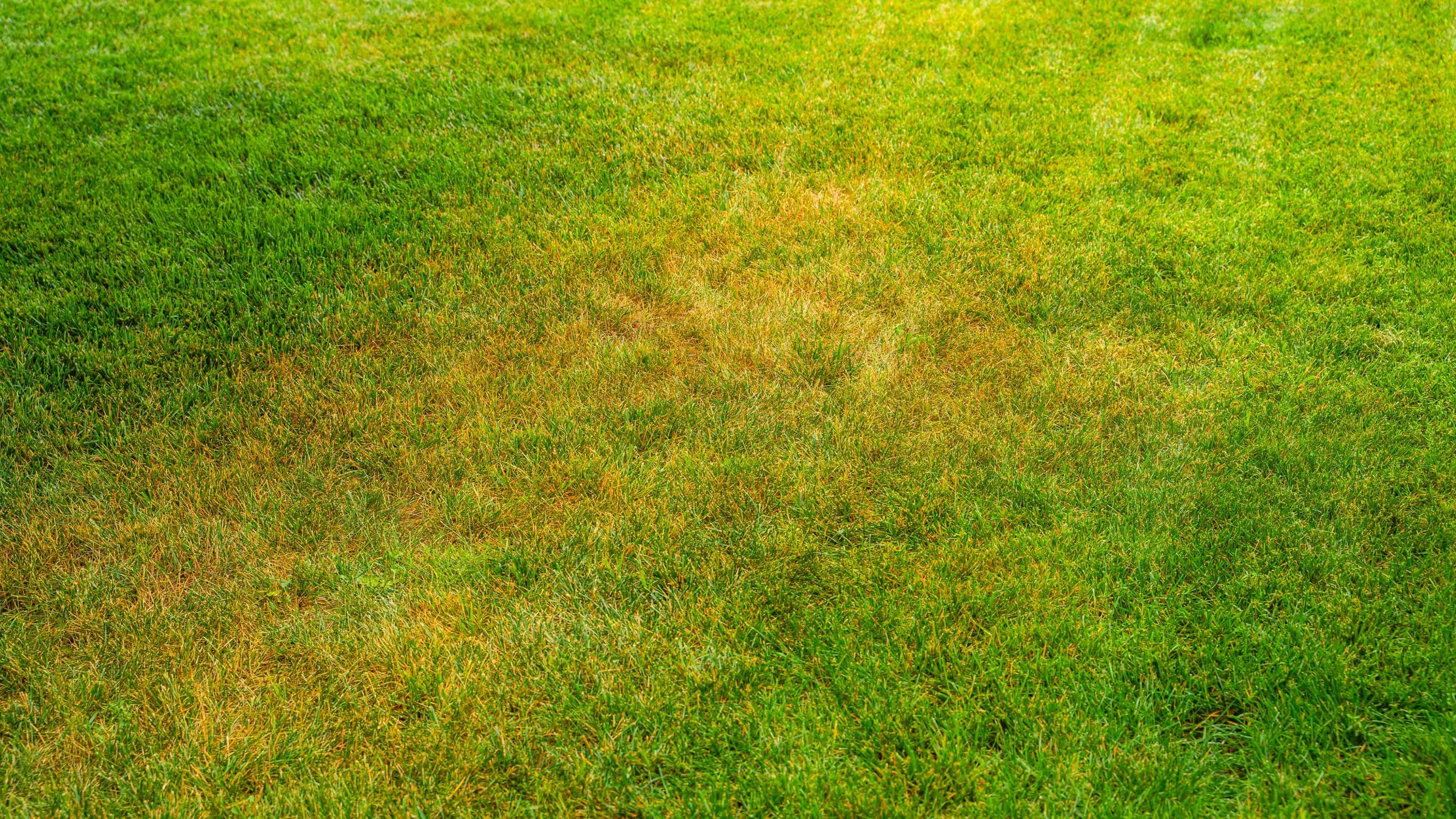
Yellowed lawn from insufficient nutrients
Problems & Solutions

Yellow Grass: Nutrient Deficiency Solutions

Yellowing of grass can be caused by a number of reasons, from nutrient imbalances to seasonal stress. In this guide, TopGrass will run through the causes of yellow grass and the methods of reviving your yellowing lawn.

By Peter Arnold•29 October 2025•Updated 12 February 2026•8 min read

Yellow grass is more than an eyesore—it’s a sign your lawn is crying out for help. Whether you’re a UK homeowner or a keen gardener, those unsightly patches often point to deeper issues. While pests, disease, and environmental stress can play a role, one of the most common culprits is lawn nutrient deficiency. The good news? With the right approach, you can fix yellow lawn problems and restore lush, green growth

Why Is My Grass Yellow?

A lush, green lawn is the hallmark of healthy lawn, so when grass starts turning yellow, it’s a clear sign that something isn’t quite right. Yellowing can be caused by a variety of factors, ranging from nutrient deficiencies to environmental stress. Pinpointing the root cause is essential for restoring your lawn’s vibrancy.

Nutrient Imbalance

Grass relies on a balanced diet of nutrients to maintain its colour and resilience. When one or more are lacking, yellowing often occurs.

  • Nitrogen deficiency: Nitrogen fuels leafy growth and rich green colour. Without it, grass blades fade to pale yellow and growth slows.
  • Iron deficiency: Iron is vital for chlorophyll production. A lack of iron often causes yellowing between the veins of leaves (known as chlorosis).
  • Magnesium deficiency: Magnesium supports photosynthesis. Deficiency can lead to patchy yellowing, especially in older leaves.
  • Solution: Apply a balanced fertiliser tailored to your soil’s needs. A soil test is the best way to identify which nutrients are missing.
Yellowed lawn from insufficient nutrients

Environmental Stress

Even well-fed lawns can suffer if external conditions aren’t right.
  • Drought or inconsistent watering: Grass needs consistent moisture. Too little water causes blades to dry out and turn yellow.
  • Soil compaction: Heavy foot traffic or clay soils can compress the ground, restricting root growth and oxygen flow. Compacted soil often leads to weak, yellow grass.
  • Shade stress: Grass in shaded areas struggles to photosynthesise, leading to thinning and yellowing.
  • Solution: Aerate compacted soil, adjust watering routines, and consider shade-tolerant grass varieties for problem areas.
Patchy grass, lawn in bad condition and need maintenance.

Seasonal Changes

Grass naturally responds to the seasons, and yellowing can be part of its cycle.
  • Winter dormancy: In colder months, many grass types slow their growth and lose colour as they conserve energy.
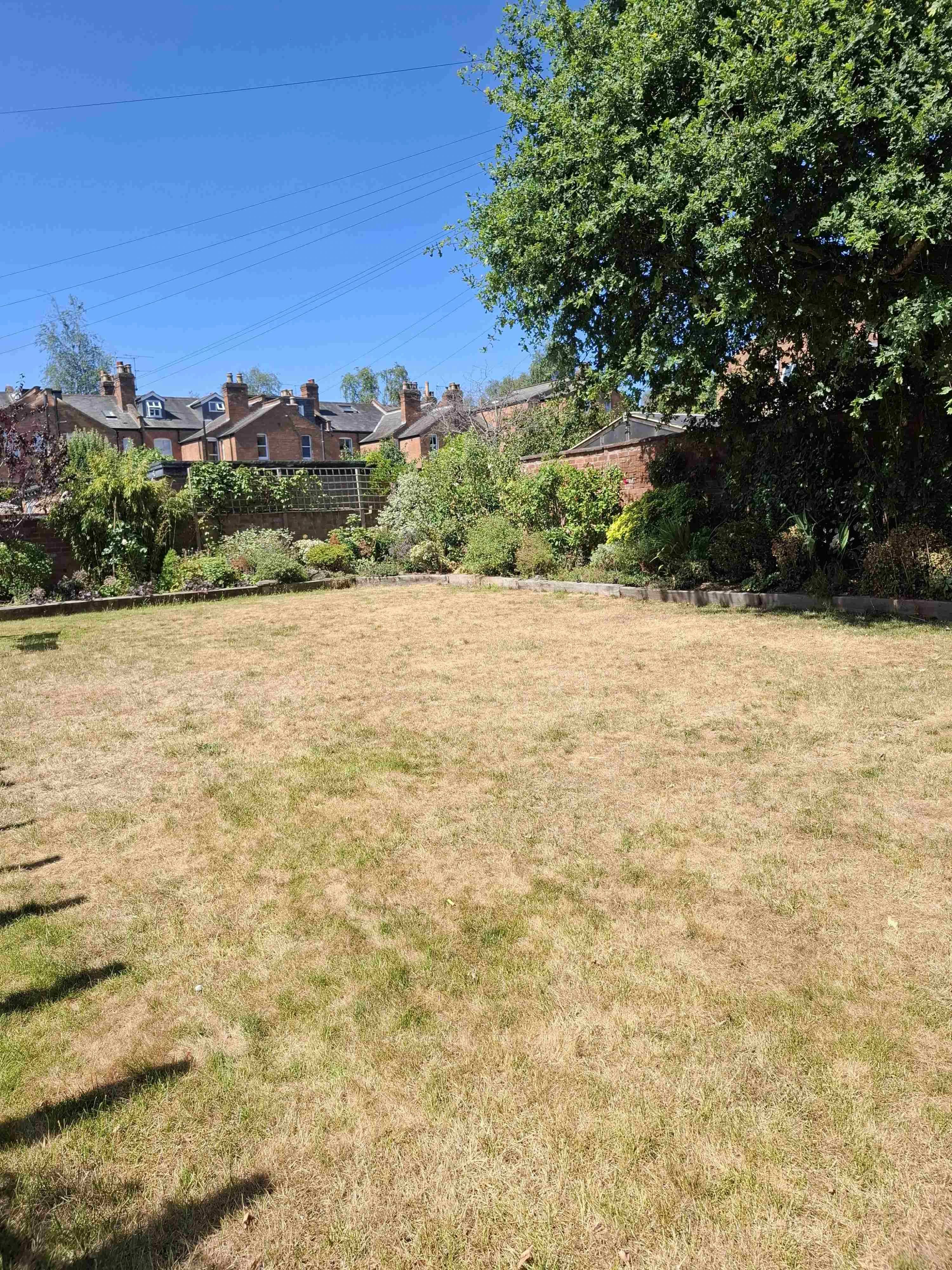
  • Summer heat stress: High temperatures and strong sun can scorch grass, especially if water is limited.
  • Solution: Accept some seasonal yellowing as natural. Support your lawn with proper feeding in spring and autumn, and water wisely during hot spells.
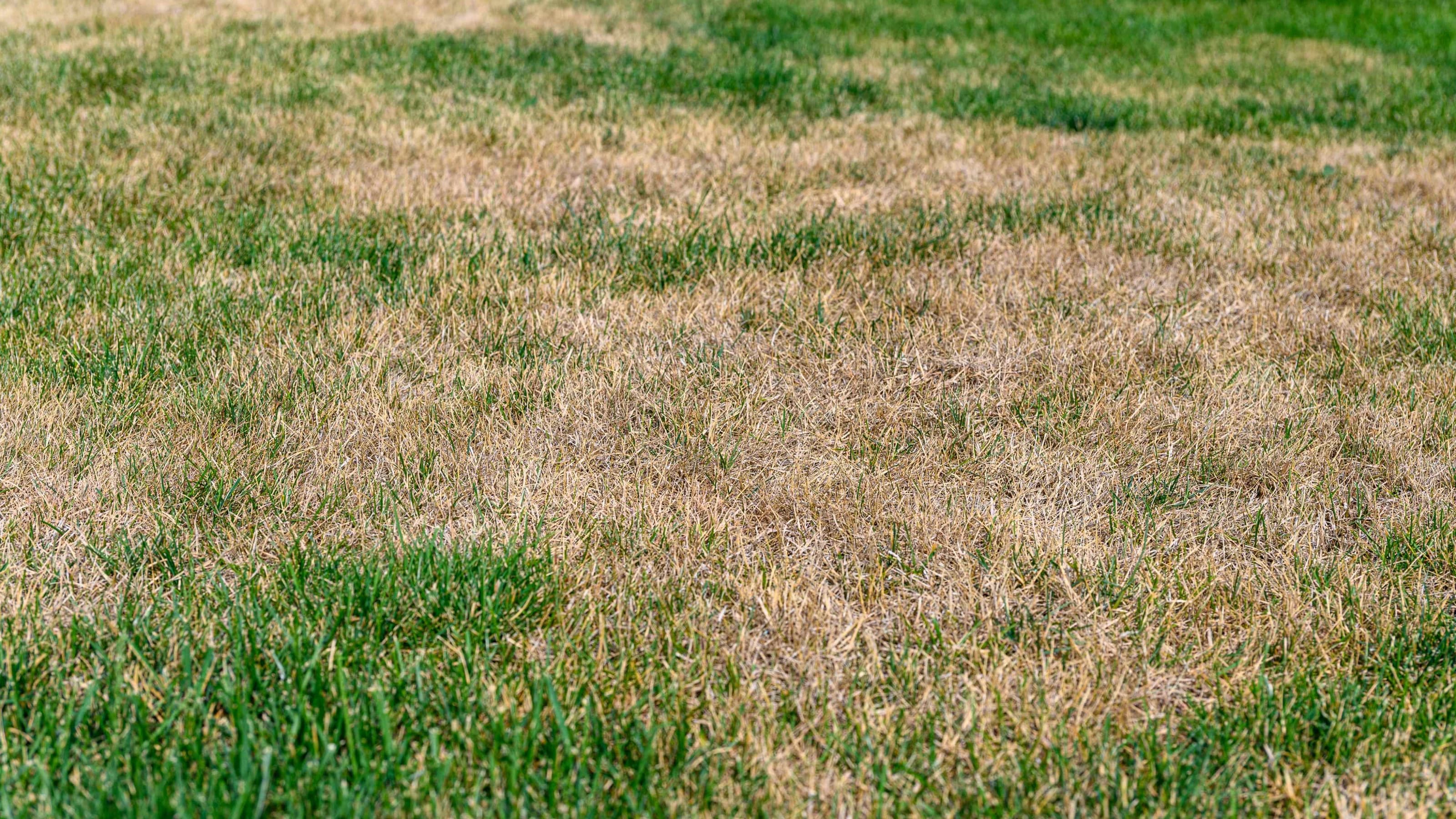
Image of lawn suffering from drought damage

Other Possible Causes

Sometimes yellowing is linked to less obvious issues:
  • Pests and diseases: Chafer grubs, leatherjackets, or fungal infections can damage roots and blades, causing discolouration.
  • Pet urine: Concentrated nitrogen in dog urine can burn grass, leaving yellow patches.
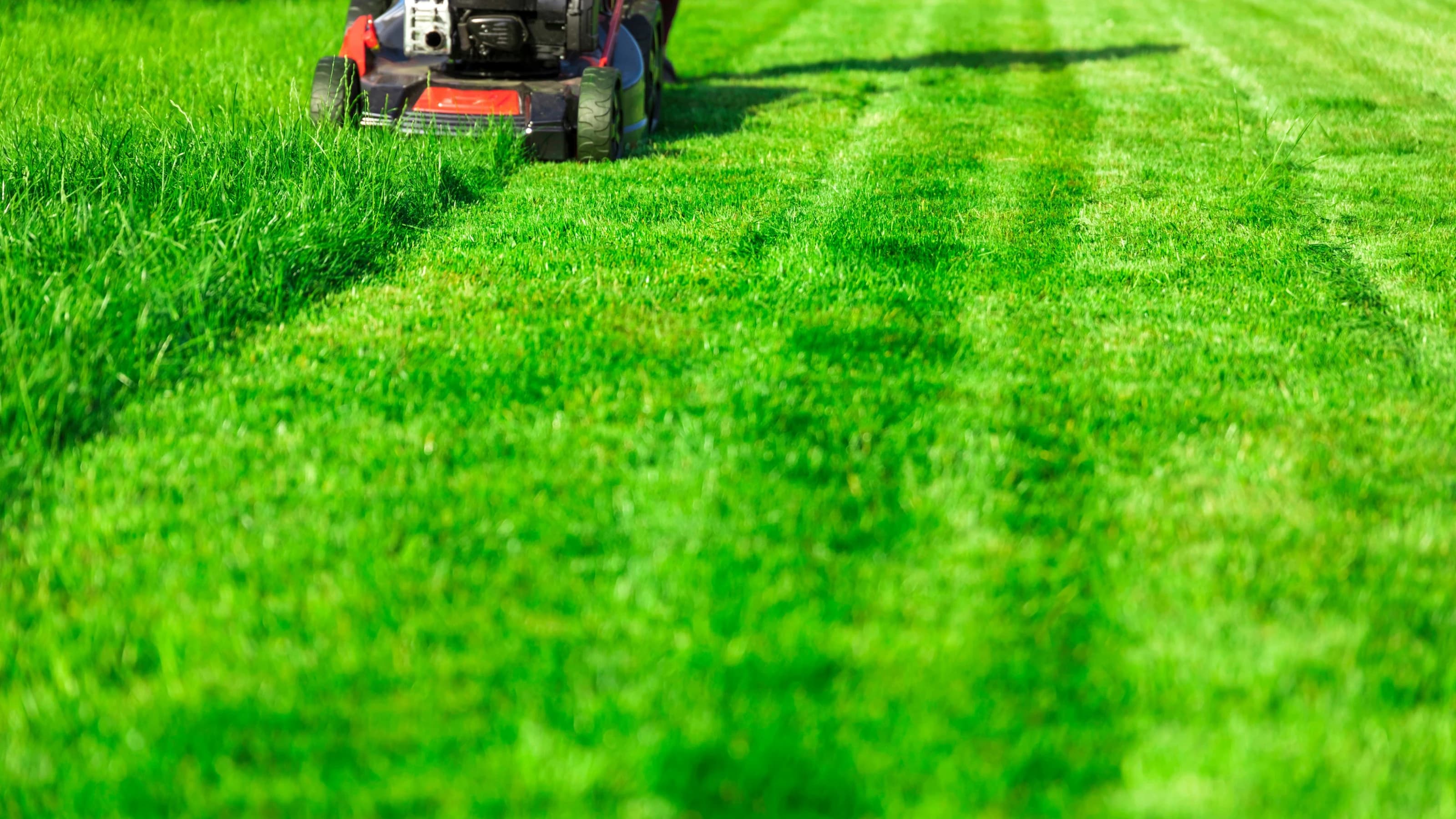
  • Mowing practices: Cutting grass too short weakens it, while dull mower blades tear rather than cut, leaving ragged yellow tips.
  • Solution: Inspect for pests, adjust mowing height, and keep blades sharp. Train pets to use designated areas or dilute urine spots with water.
Lawn mower cutting green grass, mowing lawn

Solutions & Treatments for UK Lawns

A healthy, resilient lawn requires more than quick fixes — it thrives on a structured programme of treatments that address both immediate needs and long-term soil health. Below are the cornerstone practices for effective lawn repair and ongoing care
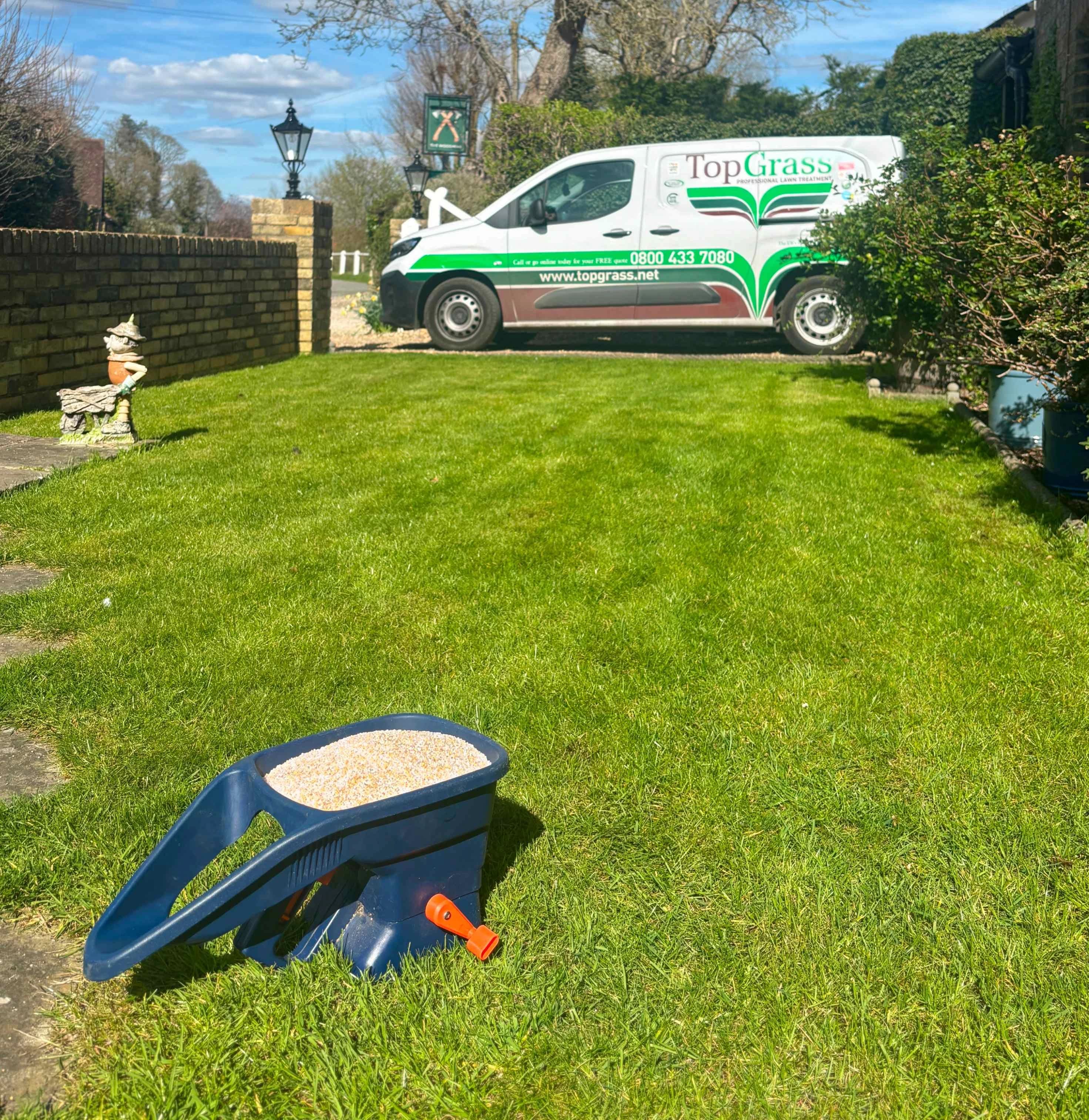
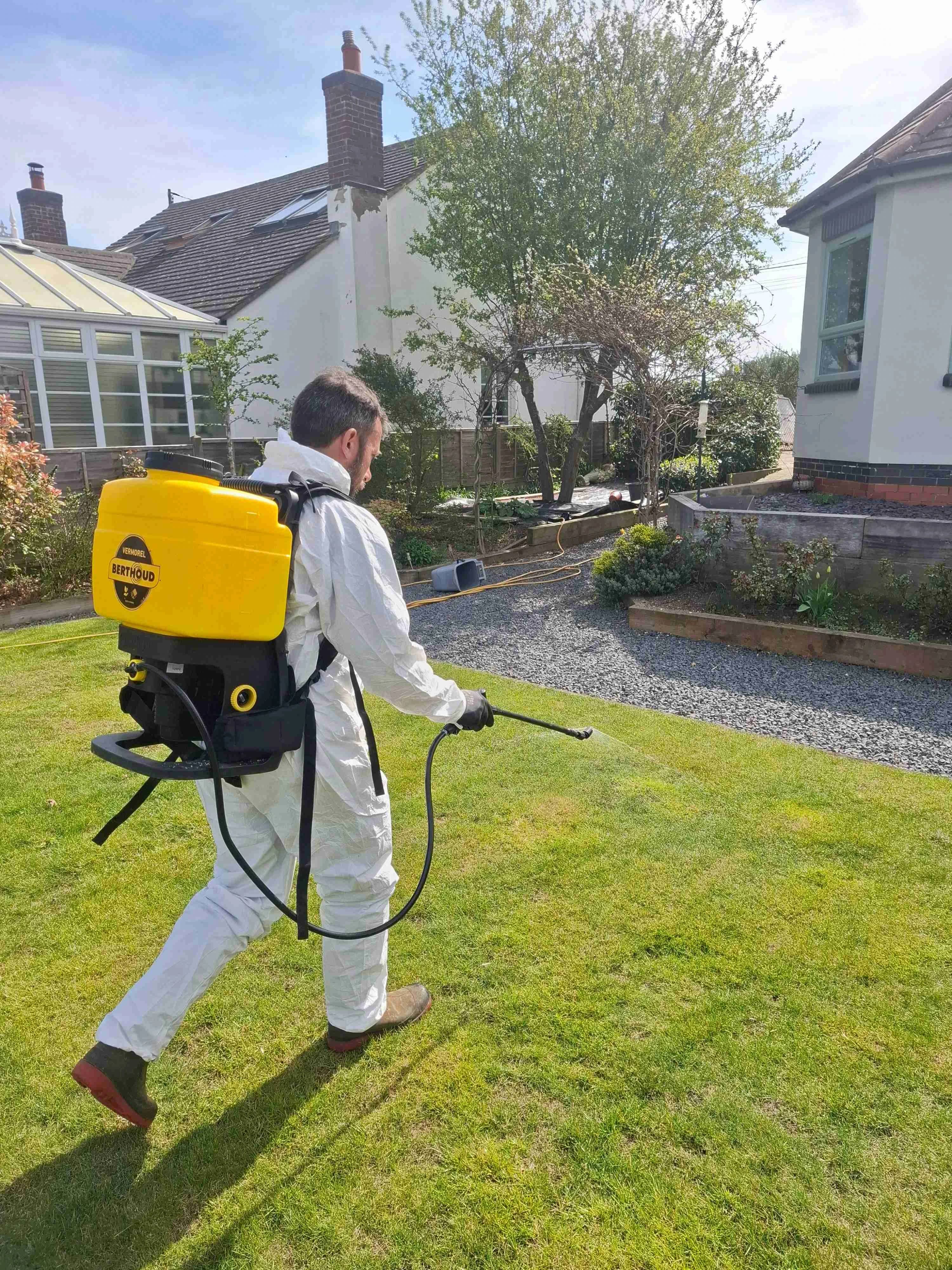
image of handheld fertliser spreader on a lawn facing a van that is branded with TopGrass

Nitrogen-Rich Fertilisers

  • Purpose: Nitrogen is the primary driver of leaf growth and vibrant green colour.
  • Application Timing: Best applied during the active growing seasons (spring and summer) when grass can utilise nutrients efficiently.
  • Benefits:
    • Stimulates rapid recovery from wear, drought, or pest damage.
    • Enhances density, reducing space for weeds to establish.
  • Considerations: Avoid over-application, which can cause excessive growth, nutrient leaching, or scorch. Controlled-release formulations are ideal for steady feeding.
  • How TopGrass can help: Our Season Starter, Early Season and Mid Season Treatments all contain a fertiliser application that will green up and strengthen your lawn.
Man with knapsack sprayer on back, spraying a lawn

Iron Sulphate Treatments

  • Dual Role:
    • Greening agent: Deepens lawn colour within days, giving a rich, healthy appearance.
    • Moss control: Acidifies the soil surface, discouraging moss growth and aiding removal.
  • Seasonal Use: Particularly effective in cool, damp conditions (autumn and winter) when moss thrives.
  • Application Notes:
    • Often applied as a liquid spray for even coverage.
    • Works best when combined with scarification to physically remove dead moss afterwards.
  • How TopGrass can help: Our Late Season and End of Season Treatments contain an iron sulphate treatment that will help to give your lawn a green up.
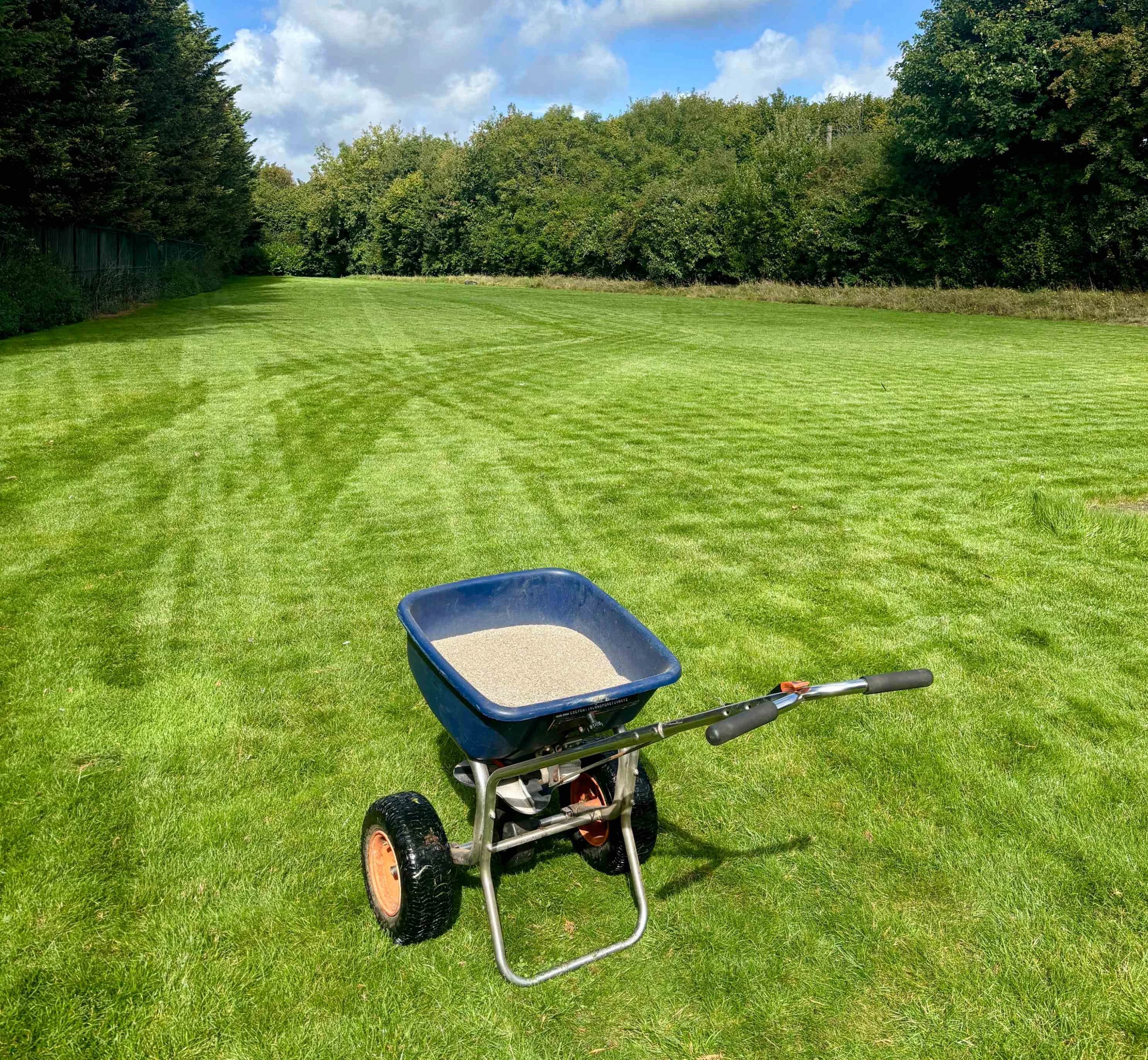
Image of fertiliser spreader on a large striped lawn

Balanced Fertiliser Programmes

  • Tailored Nutrition: UK lawns benefit from fertilisers that balance nitrogen (N), phosphorus (P), and potassium (K), alongside trace elements like magnesium and calcium.
  • Programme Design:
    • Spring: Higher nitrogen for growth.
    • Summer: Moderate feeding to sustain colour without stressing the lawn.
    • Autumn: Lower nitrogen, higher potassium to strengthen roots and improve winter hardiness.
  • Benefits: Prevents nutrient deficiencies, supports year-round resilience, and reduces reliance on reactive treatments.
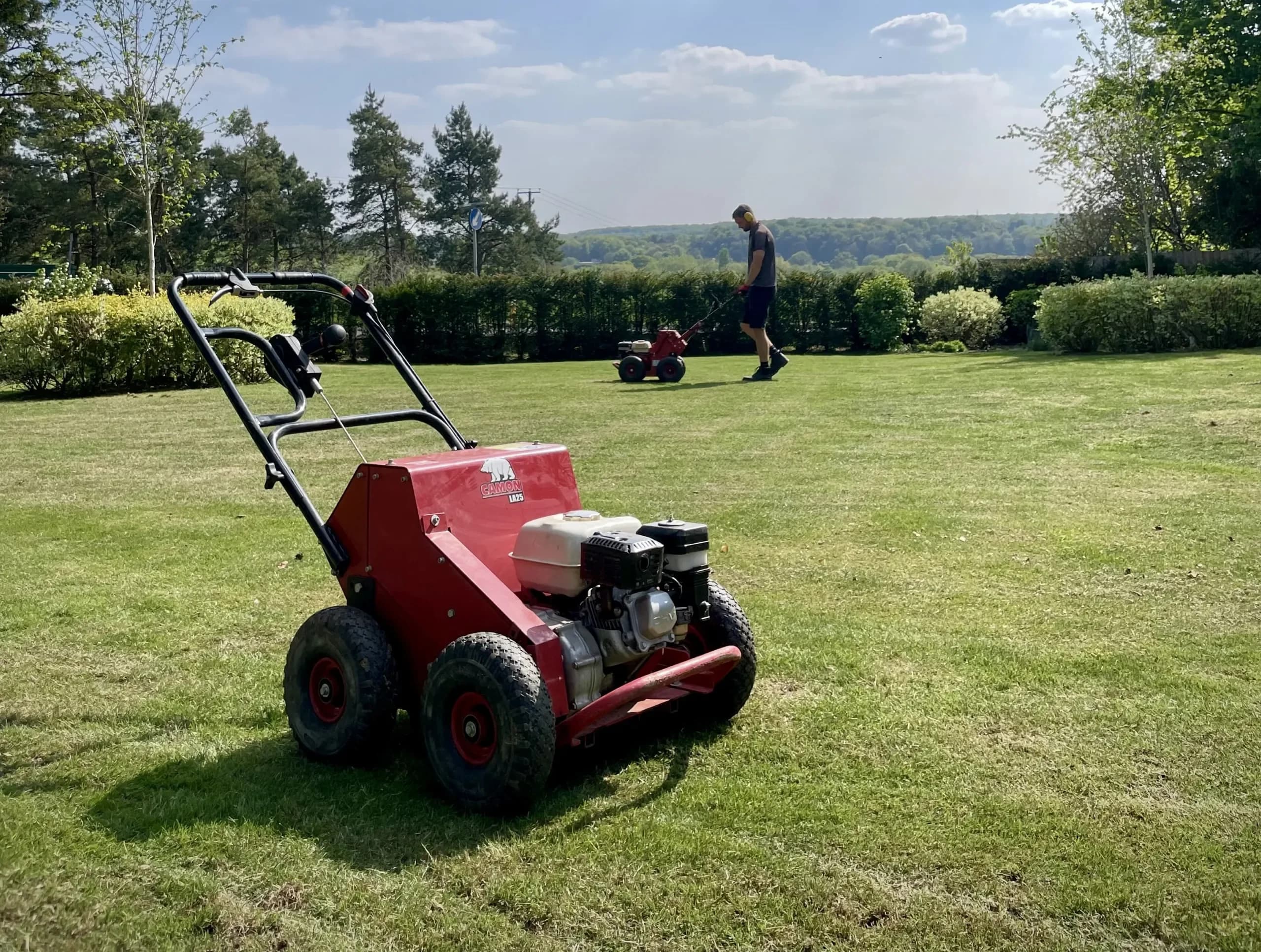
Aerator on UK lawn

Aeration & Soil Testing

  • Aeration:
    • Relieves compaction, allowing air, water, and nutrients to penetrate deeper into the root zone.
    • Encourages stronger, deeper root systems.
    • Methods include hollow-tine aeration (removes plugs of soil) and solid-tine aeration (creates channels).
  • Soil Testing:
    • Identifies pH imbalances and nutrient deficiencies.
    • Guides precise fertiliser selection, ensuring treatments are effective and cost-efficient.
  • Frequency: Aeration is typically carried out once or twice annually, while soil testing every 2–3 years provides a reliable baseline for adjustments.
  • How TopGrass can help: We recommend our Solid Tine Aeration service as the most effective way of de-compacting your lawn. You can click here to find out more.

If you have yellowing grass our Standard Package is right one for your lawn!

Our Standard Package contains fertiliser and iron sulphate treatments which both help to remedy yellowing grass. It also contains a lawn aeration to help improve drainage and better access for nutrients to reach the rootzone of the grass. You can click here to find out more about how our Standard Package can help your lawn!

Preventing Future Yellowing

Seasonal Lawn Maintenance

• Spring (March–May): Apply a balanced fertiliser high in nitrogen to encourage lush growth. Overseed thin patches to thicken the sward, and start mowing regularly at the correct height (around 25–35 mm).

• Summer (June–August): Switch to a fertiliser with lower nitrogen and higher potassium to build resilience against drought and heat. Water deeply but infrequently, ideally in the early morning, to reduce evaporation. Raise mowing height slightly to reduce stress.

• Autumn (September–November): Focus on recovery. Apply an autumn fertiliser rich in potassium and iron to strengthen roots and improve colour. Overseed again if needed, and carry out scarification to remove summer thatch.

• Winter (December–February): Protect the lawn by avoiding heavy traffic on frosty or waterlogged grass. Clear debris and leaves to prevent disease, and consider a light winter feed if conditions allow.
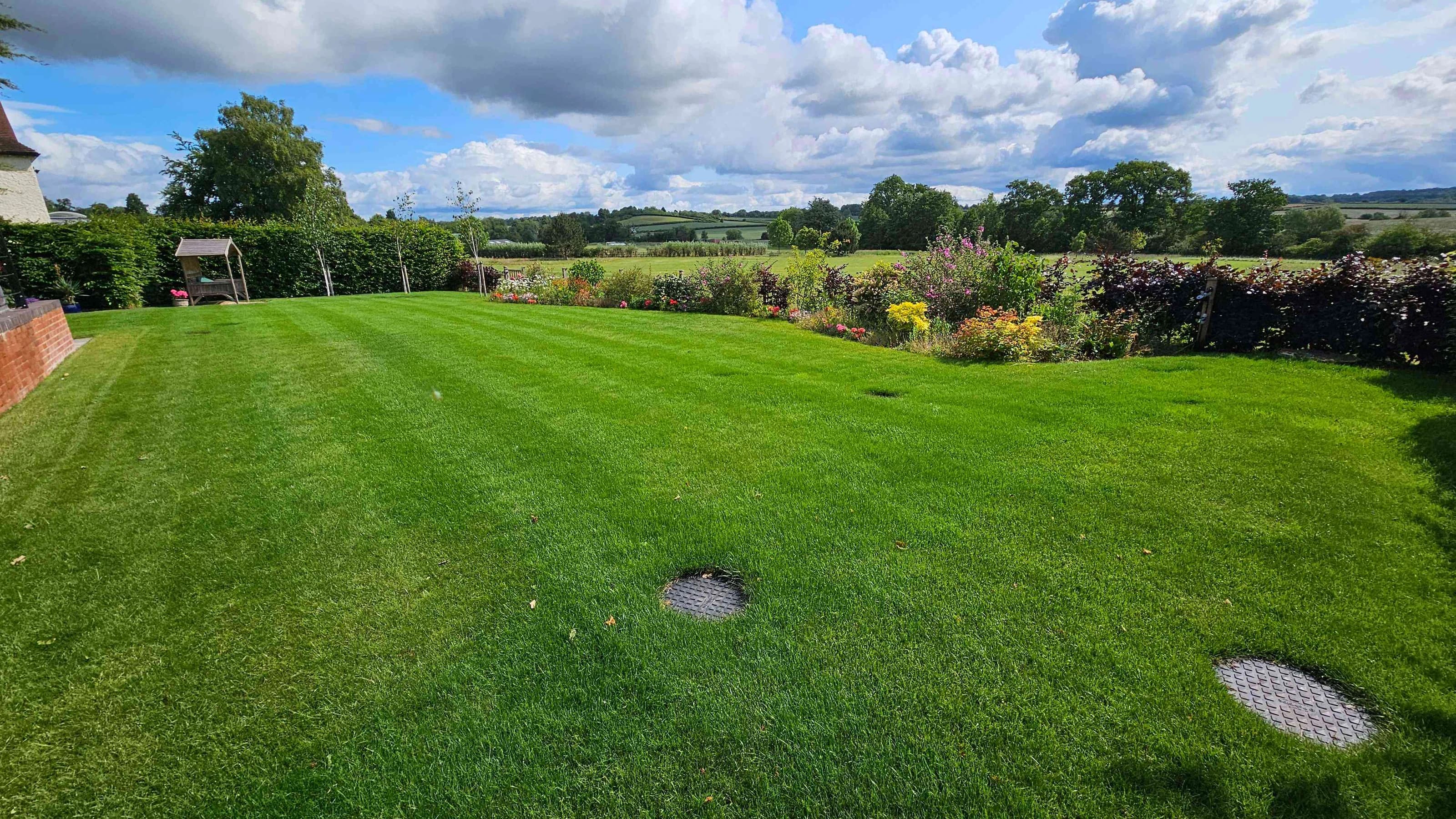
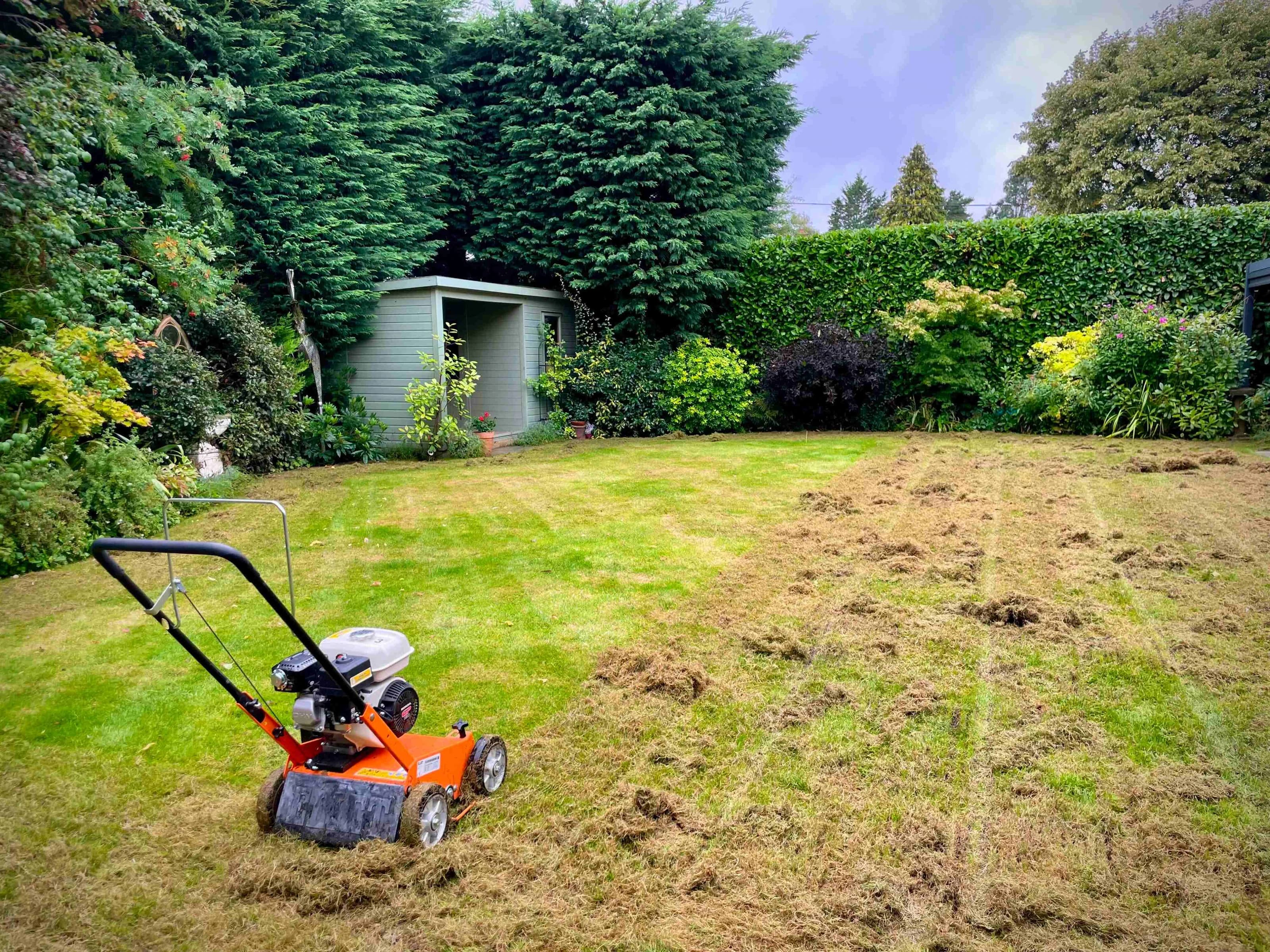
Image of well maintained, striped lawn

Regular Aeration and Scarification

  • Aeration: Relieves soil compaction, improves drainage, and allows oxygen and nutrients to penetrate the root zone. Hollow-tine aeration in autumn or spring is especially effective for clay-heavy UK soils.
  • Scarification: Removes excess thatch and moss, which otherwise block water and nutrients. Best carried out in autumn or spring, followed by overseeding to restore density.
Image of lawn scarifier on a lawn that has been partially scarified

Professional Lawn Care Services

  • Tailored solutions: Experts can diagnose underlying causes of yellowing, such as nutrient deficiencies, fungal diseases, or poor soil structure.
  • Advanced treatments: Services may include our Soil Improver Programme, fertiliser treatments, Water Conserver Treatment for dry patches, or Red Thread Treatment to tackle fungal diseases.
  • Guaranteed results: Professional programmes ensure consistency, saving time and reducing the risk of over- or under-treatment.
image of handheld fertliser spreader on a lawn facing a van that is branded with TopGrass

If you are having problems with yellow grass, then contact us today!

Yellow grass is a solvable problem with the right nutrients and care. By identifying deficiencies and applying targeted treatments, you can transform a tired lawn into a vibrant, healthy space.

Click here to get your free quotation!

Yellowing Grass FAQs

Grass often turns yellow due to nutrient deficiencies (such as lack of nitrogen, iron, or magnesium), environmental stress (drought, soil compaction, or shade), or seasonal changes like winter dormancy and summer heat stress. Identifying the root cause is key to restoring a healthy, green lawn.

The most common nutrient deficiencies linked to yellow grass are:

• Nitrogen deficiency – causes pale, slow-growing grass.

• Iron deficiency – leads to chlorosis (yellowing between leaf veins).

• Magnesium deficiency – results in patchy yellowing, especially in older blades.

A soil test is the best way to confirm which nutrients your lawn is lacking

To revive yellow grass:

  • Apply a balanced fertiliser tailored to your soil.
  • Use iron sulphate treatments to green up grass and control moss.
  • Aerate compacted soil to improve drainage and nutrient uptake.
  • Adjust watering routines to prevent drought stress.
    Professional lawn care packages, like TopGrass’s Standard Package, combine fertiliser, iron sulphate, and aeration for long-lasting results.

Yes. Seasonal stress is a natural cause of yellowing:

• Winter dormancy – grass slows growth and loses colour.

• Summer heat stress – high temperatures and limited water can scorch lawns.

Supporting your lawn with seasonal fertilisers and proper watering helps minimise yellowing throughout the year.

Preventing yellow grass requires a year-round lawn care programme:

• Spring – nitrogen-rich fertiliser and overseeding.

• Summer – potassium-based fertiliser and deep watering.

• Autumn – scarification, overseeding, and potassium/iron feeds.

• Winter – protect against frost, avoid heavy traffic, and clear debris.

Regular aeration and scarification keep soil healthy and reduce future yellowing
Related Articles

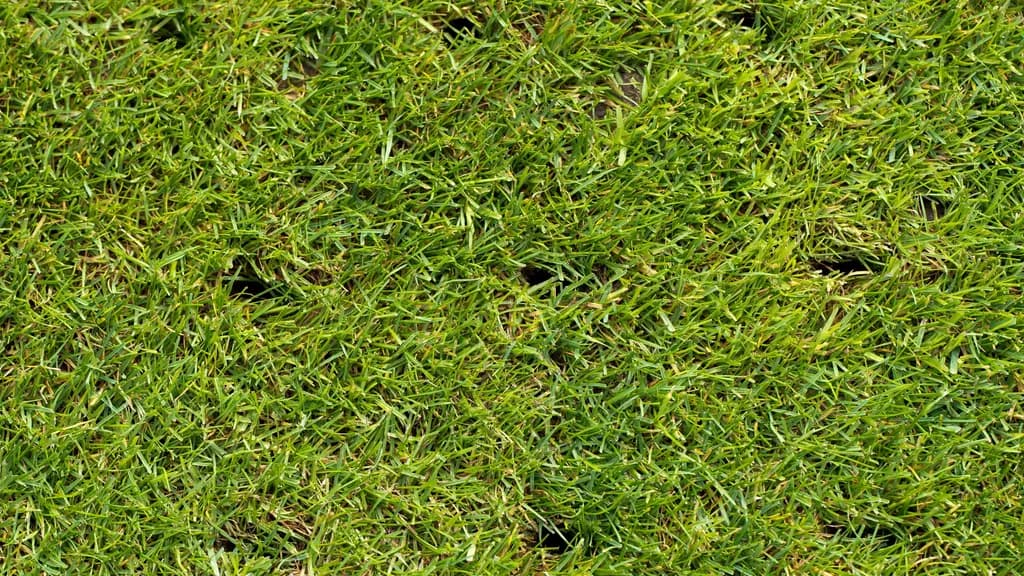
Compacted Soil: When & How to Aerate Your Lawn
29 October 2025•By Peter Arnold

Compacted Soil: When & How to Aerate Your Lawn

This is your TopGrass guide to compacted soil, the reasons why your soil is compacted and how to solve the issue!
Moss in Lawns: Prevention & Removal Guide
29 October 2025•By Peter Arnold

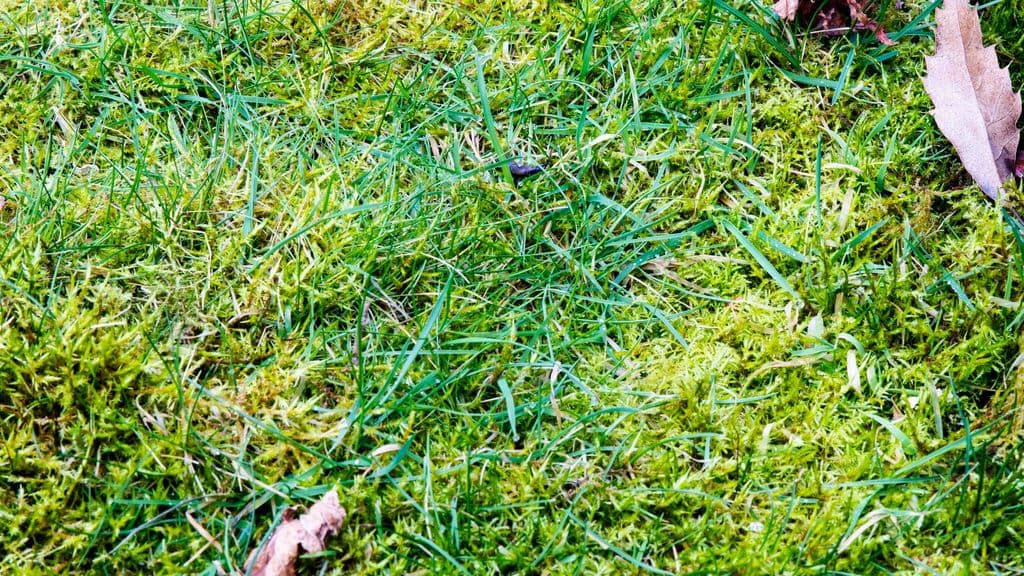
Moss in Lawns: Prevention & Removal Guide

There are a variety of reasons why moss might grow in your lawn, as well as many differing methods of preventing moss and removing it. This is your TopGrass guide to how to prevent moss growth and how to take care of it if you have a moss problem in your lawn.
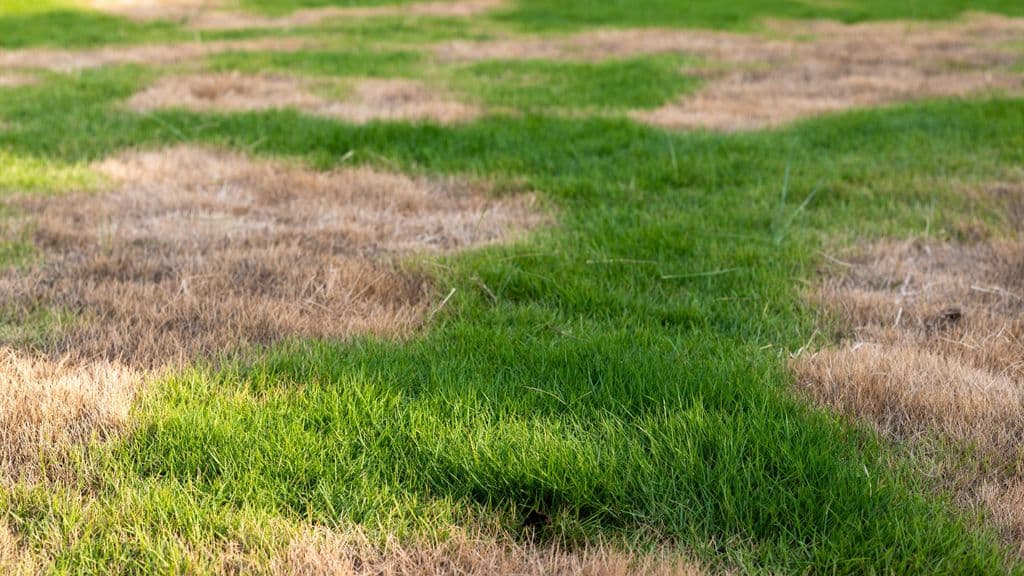
Brown Patches in Lawns: Causes, Identification & Solutions
21 October 2025•By Peter Arnold

Brown Patches in Lawns: Causes, Identification & Solutions

This is your TopGrass guide on how to identify brown patches in your lawn and how to solve them.