

Can you mow the lawn in winter? Frost, wet grass and the last cut
Yes, if the grass is still growing and the lawn is dry, firm and free of frost. Cut high, at 50 to 65 mm, take off no more than a third, and leave the mower in the shed on wet, frozen or frosty days.
Key takeaways
Yes, you can mow in winter when the grass is still growing, which it does above about 5°C. Pick a dry, mild day when the ground is firm and there is no frost. Set the mower high, at 50 to 65 mm, and take off no more than a third. If the lawn is wet, frozen or frosty, leave it alone.
- Grass keeps growing in mild spells, so there is no fixed date for the last cut of the year.
- Never mow frosty or frozen grass, and stay off it until the frost has gone.
- Wet grass and soft ground do more harm than a lawn that is a little long.
- Cut at 50 to 65 mm in winter and never remove more than a third of the height in one go.
- Collect the clippings: they do not rot down in the cold and will smother the grass.
At a glance
- Mow when
- The grass is growing and the lawn is dry, firm and frost-free
- Cutting height
- 50 to 65 mm (2 to 2.5 in)
- How often
- Every three to four weeks in a mild spell, or not at all
- Best time of day
- Late morning to mid-afternoon
- Leave it when
- There is frost, standing water, soft ground or a cold, drying wind
When to do it
Also possible: November to February.
Can you mow the lawn in winter?
Yes. The rule is about conditions, not the calendar: if the grass is growing and the lawn is dry, firm underfoot and free of frost, it is fine to cut it in December, January or February. The Royal Horticultural Society says the same. Mowing in winter is usually not needed, but when the weather is mild and the grass is still growing, mow occasionally on a high cut.
Grass grows whenever the temperature is above about 5°C, and UK winters now give it plenty of chances. The Met Office counts the growing season as the run of days warmer than that, and in central England it averaged 280 days a year between 2006 and 2015, 29 days longer than between 1961 and 1990. A lawn that needs a trim at Christmas is no longer unusual.
What matters is not making things worse. A lawn left a little long comes to no harm. A lawn mown when it is frosty, sodden or soft can be marked until spring. The rest of this guide is about telling the two kinds of day apart.
When should you leave the mower in the shed?
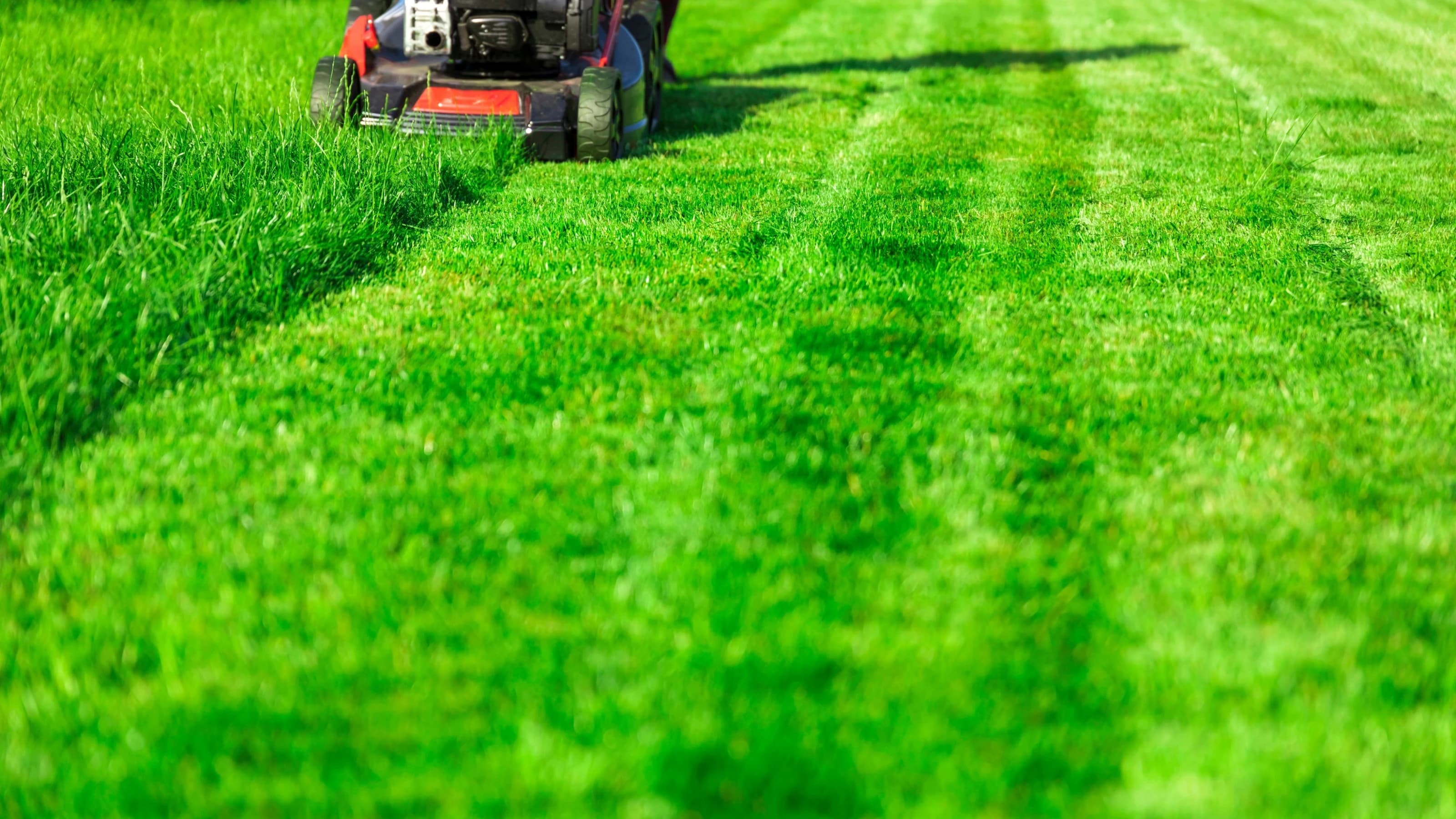
Whenever the grass is frosty or wet, or the ground is frozen or soft. The RHS advice is blunt: never mow wet or frosty grass, and never mow when the ground is very soft, wet or frozen, or during spells of cold, drying winds. Check all four things before you get the mower out. If one of them says no, wait for a better day; in winter there is no hurry.
| What you see | Mow? | Why |
|---|---|---|
| Frost on the grass | No | Frozen leaves are brittle. Wheels and feet crush them, and the marks turn brown and stay for weeks. |
| Frozen ground | No | The grass is not growing, so there is nothing to cut, and the turf is easily damaged. |
| Wet grass or heavy dew | No | Wet grass tears instead of cutting, clogs the mower and drops in clumps that smother the lawn. |
| Soft or squelchy ground | No | The mower sinks, the wheels leave ruts, and the blade scalps the high spots. The soil is compacted too. |
| A cold, drying wind | No | Freshly cut tips dry out and brown. Wait for a still, mild day. |
| Snow on the ground or forecast | No | Keep off altogether until it has melted and the ground has drained. |
| Dry, mild, firm underfoot and the grass has grown | Yes | Cut high, at 50 to 65 mm, and take off no more than a third. |
Top tip
The footprint test
Walk across the lawn before you fetch the mower. If your footprints fill with water, the ground squelches or your heel sinks in, it is too wet to mow. If the grass crunches, it is too frosty. Firm and quiet underfoot is what you want.
What do frost and wet ground do to a lawn?

Frost
When grass freezes, ice forms inside the leaves. Anything that presses on them, whether a mower wheel, a boot or a dog, crushes the frozen cells. The damage shows a day or two later as brown or black footprints and wheel lines, and it does not grow out until spring.
So keep off a frosted lawn completely, not only with the mower. Wait until the frost has thawed and the leaves have dried, which on a sunny winter day is usually late morning. A lawn that stays white all day in the shade of a fence or hedge stays out of bounds all day.
Wet ground
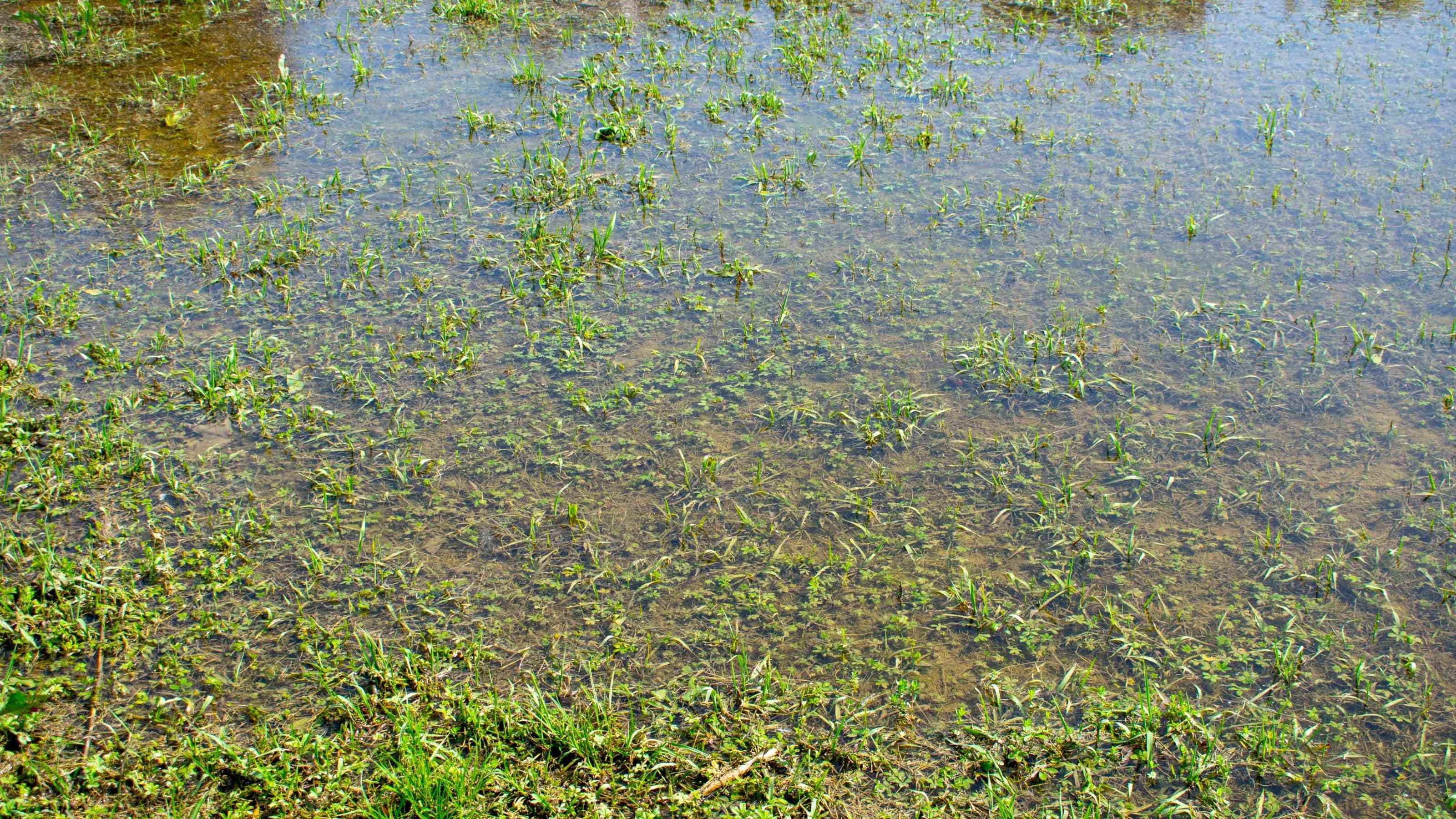
Wet soil cannot carry weight. A mower pressed into it squeezes out the air spaces that roots and drainage rely on, and on the clay soils common across Essex, Hertfordshire and the Midlands the effect lasts. Compacted, airless ground is where moss does best.
If water stands on the lawn for days after rain, the mowing is not the problem to solve. Our guide to waterlogged lawns and drainage covers what to do, and aeration is usually where it starts.
How high should you cut the grass in winter?
Cut at 50 to 65 mm (2 to 2.5 inches), which on most mowers is the highest or second-highest setting. That is the autumn and winter height on our own mowing guidelines, roughly double the 25 to 35 mm we recommend in spring and summer.
Advice on this varies. The RHS suggests up to 40 mm for an ordinary lawn in spring and autumn, and for winter says only to use a high cut. We go higher for three reasons. A longer leaf catches more of the weak winter light. It protects the crown of the plant, where new growth comes from, against frost and wear. And a high blade is far less likely to scalp a lawn that is soft and uneven.
Whatever the height, never take off more than a third in one cut. If the grass has reached 90 mm, bring it down to 60 mm and stop. Stay on the winter height for the first few cuts of spring as well, and only lower the mower once the grass is growing strongly.

From our lawn team
Moss, slopes and shade
If there is moss in the lawn, set the mower at least 15 mm (half an inch) above the top of the moss, so the blade skims the grass and leaves the moss alone. Slopes, bumpy ground and shady corners should stay at the winter height all year: they are the first places a low blade scalps.
How do you mow a lawn in winter?
Slowly, high, and with the grass box on. A winter cut is a tidy-up, not a haircut: you are taking the top off, keeping the lawn even and picking up whatever has landed on it.
You will need
- A mower with a sharp blade and a grass box
- A stiff brush or a spring-tine rakeFor leaves and worm casts
- A dry, mild day with no frost forecast overnight
Step 1: Pick the day and the time
Choose a dry, still day after two or three days without rain, and mow between late morning and mid-afternoon, once the dew has gone. If a sharp frost is forecast that night, leave it for another day: freshly cut grass is more easily damaged by frost.
Step 2: Check the ground
Do the footprint test. Firm underfoot means go ahead. Soft, squelchy or frozen means the mower stays where it is.
Step 3: Clear the lawn first
Rake or brush off leaves and twigs, and scatter any worm casts with a stiff brush once they are dry. Mowing over wet casts smears mud across the grass and leaves bare spots where weeds and moss move in. See our guide to leaves, worm casts and toadstools.
Step 4: Raise the mower to 50 to 65 mm
Use the highest setting if you are not sure what the numbers on your mower mean. Check the blade is sharp. A blunt blade tears the leaf, and in cold, damp weather a torn tip heals slowly and lets disease in.
Step 5: Mow slowly and collect the clippings
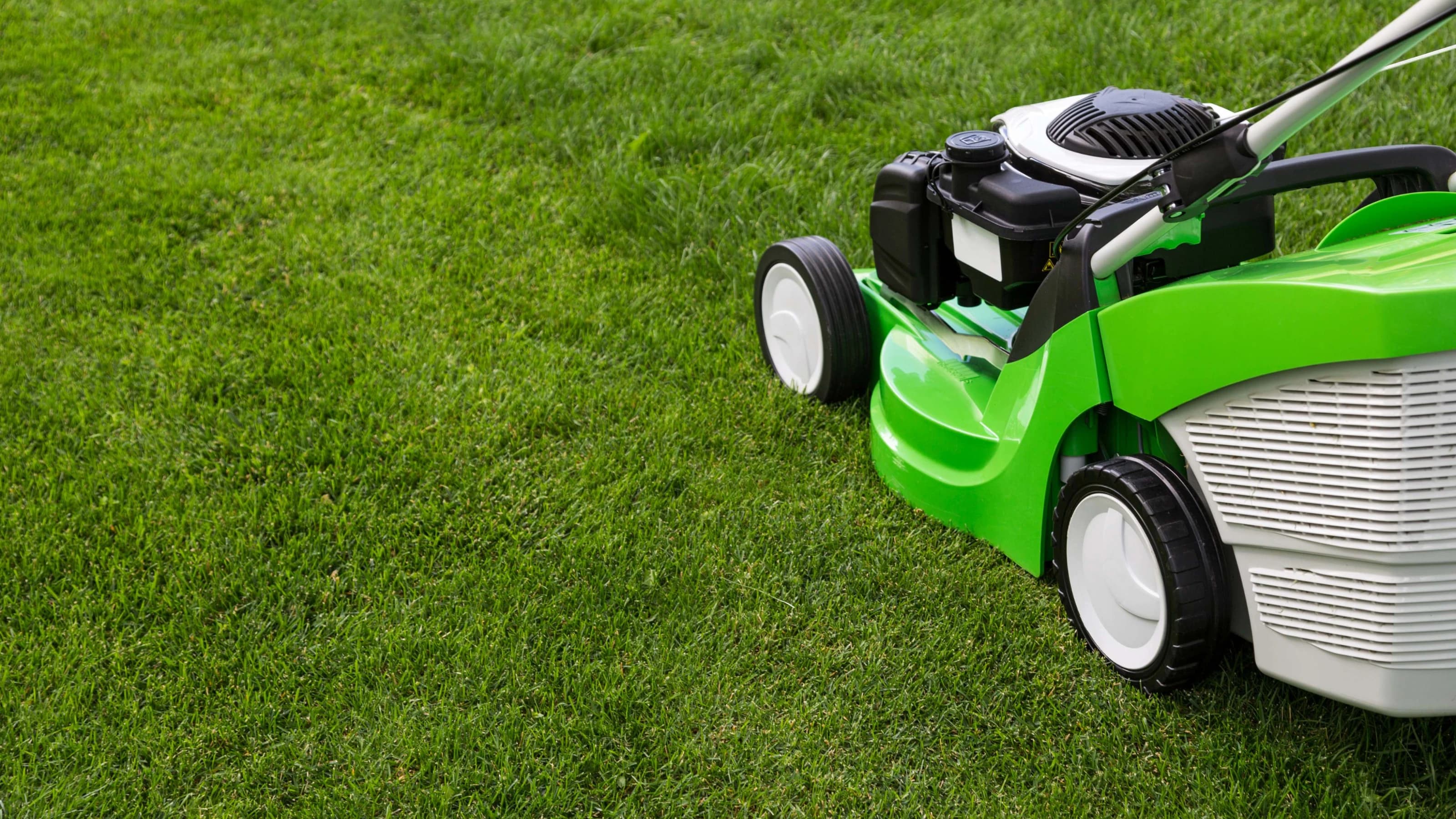
Walk at half your summer pace and empty the box before it is full. Clippings do not break down in cold weather. Left on the lawn, they sit in damp clumps that block the light and encourage disease, so in winter always collect them.
Step 6: Clean the mower before you put it away
Damp winter clippings stick under the deck and set hard. Unplug the mower or take the battery out, or on a petrol mower pull the spark plug lead off, then scrape and brush the underside clean.
Watch out
Sown or turfed this autumn?
A new lawn needs more care in its first winter. Wait until the grass is at least 50 mm tall, use the highest setting, and only mow when the ground is firm enough that the mower does not pull the young plants out. If in doubt, leave the first cut until spring.
When is the last cut of the year?
When the grass stops growing, not on a date. Keep mowing through autumn for as long as the lawn keeps growing, raising the height as you go, and stop when a week or two passes with nothing to cut. In the Midlands and the East of England that is usually some time in November, and in a mild year it can be well into December.
Do not be tempted to finish the year with a short cut. A lawn that goes into winter scalped is more exposed to frost and thinner by spring, which is an open door for moss. Leave it at 50 to 65 mm, and think of the cuts from then on as optional.
| Month | What the grass is doing | What to do |
|---|---|---|
| November | Slowing down, and still growing in mild spells | Mow every two to three weeks at 50 to 65 mm while it grows. Keep the leaves off. |
| December | Close to a standstill in most years | A light trim on a dry, mild day only if it has clearly grown. Book the mower in for a service. |
| January | Dormant in cold spells; frost is common | Usually nothing. Keep off when it is frosty or waterlogged. |
| February | Starting to move in a mild year | A light top on the highest setting if growth has started, on a dry, frost-free day. |
From March the lawn is back in growth and the routine changes. Our month-by-month lawn care calendar picks up from there.
What should you do with the mower over winter?
Get it serviced while you are not using it. December and January are the quiet months for repair shops, and a mower that is ready in February is one less thing to sort out when the grass takes off in March.
- Sharpen or replace the blade. It is the single thing that most improves the cut.
- Clean under the deck and check the grass box for splits.
- Petrol mowers: change the oil, clean or replace the air filter and check the spark plug. Do not leave old fuel in the tank until spring; run it dry or add a fuel stabiliser.
- Battery mowers: store the battery indoors, part charged, where it will not freeze.
- Check the height adjuster moves freely, so you can find the winter setting when you want it.
Winter mowing FAQs
Yes, if it is growing and the conditions are right: a dry, mild day, firm ground and no frost. Cut at 50 to 65 mm and collect the clippings. If the grass has not grown, there is nothing to gain by mowing it.
It is best not to. Wet grass tears instead of cutting cleanly, clogs the mower and falls in clumps, and the ground under it is usually soft enough for the wheels to leave ruts. Wait for a dry afternoon. In winter a few days' delay costs the lawn nothing.
Below about 5°C grass more or less stops growing, so there is nothing to mow. The real limits are frost and frozen ground, whatever the thermometer says: never mow, or walk on, a lawn that is white with frost.
Longer than in summer. We recommend 50 to 65 mm through autumn and winter. Short grass is more exposed to frost and gives moss room to spread. Much longer than that and it can flop over and stay wet, so trim it in a mild spell if it gets away.
No. Frozen grass leaves break when they are crushed, and the footprints turn brown and stay until the lawn grows again in spring. Wait until the frost has thawed, and use a path or stepping stones for the route you take every day.
The mowing is yours. The rest can be ours.
Our treatments carry on through autumn and winter, strengthening the grass, hardening it against disease and keeping moss in check. Trace your lawn on our instant quote tool to see a price for each package.
Go deeper
- Seasonal GuidesWinter Lawn Care Guide6 min read
- ProblemsWaterlogged Lawns & Drainage Issues: How to Fix5 min read
- GuidesThe Complete TopGrass Lawn Care Calendar: Month-by-Month Guide25 min read
- Lawn Care TipsHow to Achieve Perfect Lawn Stripes: Mowing Techniques3 min read